

Why Embryo Stress Matters and How Modern Incubators Can Minimize It
In IVF, success begins long before embryo transfer. The earliest stages of embryo development are highly sensitive to their surroundings, and even brief environmental disturbances can influence developmental potential. Temperature shifts, gas fluctuations, and unnecessary handling introduce stress that may compromise embryo quality and downstream clinical outcomes.
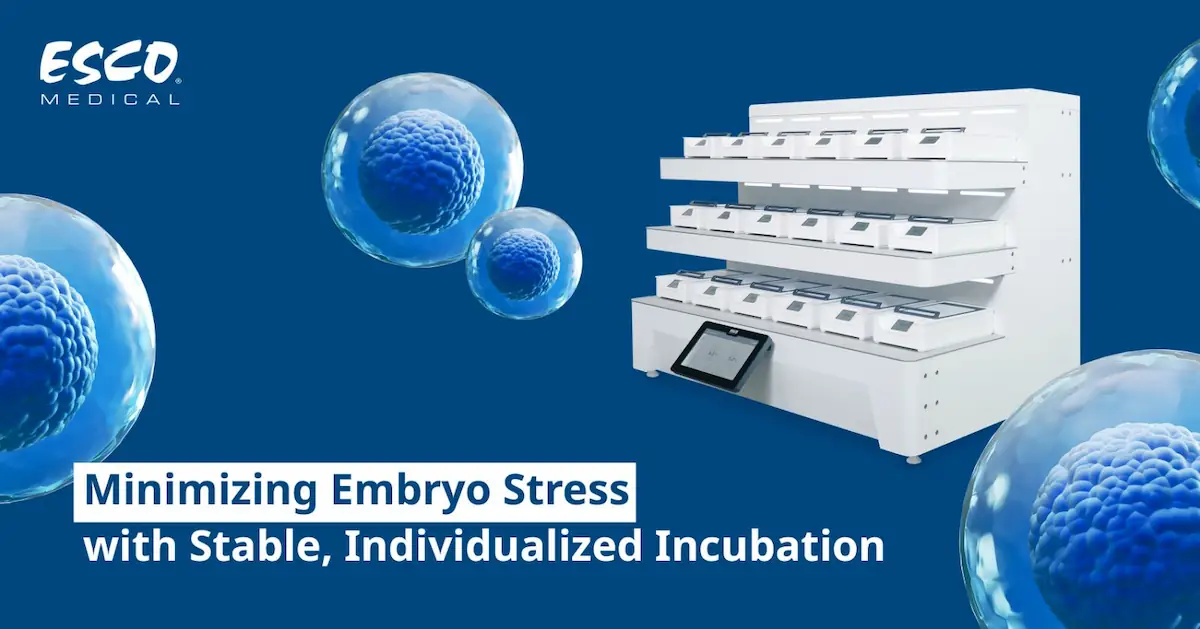
As IVF laboratories manage increasing cycle volumes and higher expectations for consistency and quality, reducing embryo stress has become a strategic priority. Modern incubation concepts, such as MIRI® M, are designed to protect embryos by maintaining a stable, individualized micro-environment throughout daily laboratory workflows.
How Routine Handling and Environmental Changes Create Embryo Stress
Embryos developing in vitro are exposed to conditions that differ significantly from those inside the human body. Routine laboratory activities such as opening incubators, moving culture dishes between workstations, or prolonged exposure during assessment can disrupt the tightly regulated environment required for normal embryo development.
A key mechanism underlying embryo stress is the generation of reactive oxygen species (ROS). Excess ROS exert pathological effects by damaging cellular lipids, organelles, and DNA, altering enzymatic function, and triggering apoptosis. ROS may be produced intracellularly by immature sperm, oocytes, and embryos, and can be further amplified by external factors within the ART laboratory.
Among these factors, oxygen exposure plays a central role. Atmospheric oxygen levels generate higher oxidative stress compared with the naturally low-oxygen environment of the female reproductive tract. Additional contributors to elevated ROS include incubator conditions, consumables, visible light exposure, temperature and humidity fluctuations, volatile organic compounds, and certain culture media additives. Together, these sources of oxidative stress can impair cellular function and reduce embryo developmental potential.
In addition, routine laboratory disturbances may cause temporary drops in temperature and fluctuations in CO₂ and O₂ concentration. These changes can interfere with cellular metabolism, enzyme activity, and pH balance. While individual events may appear minor, their cumulative effect over several days of culture can negatively influence embryo competence.
MIRI® M: Improved Multi-Room Incubation Stability
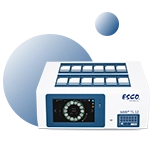
MIRI® M is built around a modular multi-room incubation concept that gives each chamber full environmental independence. By isolating embryos in dedicated micro-environments, MIRI® M minimizes cross-disturbance and ensures rapid, reliable recovery after routine handling.
The advanced gas control system delivers outstanding stability and fast recovery:
- Rapid gas recovery: CO₂ < 3 minutes, O₂ < 5 minutes after chamber docking
- Fast temperature recovery: < 1 minute after lid opening (≤ 10 seconds)
- Temperature stability: ± 0.1 °C at setpoint
- Gas stability: ± 0.2% at setpoint
This stable micro-environment closely mimics in vivo embryo development by maintaining constant temperature and pH, preserving optimal gas levels, and reducing oxidative and mechanical stress.
MIRI® M: Movable Chambers with Built-In Digital Traceability
MIRI® M enhances laboratory safety and workflow control through movable incubation chambers combined with built-in digital traceability. Each chamber maintains continuous embryo identification, reducing the risk of mix-ups while supporting secure handling throughout daily operations.
To further protect embryos, MIRI® M integrates intelligent safety and alarm features. Real-time monitoring alerts users to abnormal conditions, while a tilt alarm provides immediate warning if a chamber is unintentionally angled during handling or transport.
By reducing unnecessary handling and environmental exposure, MIRI® M minimizes
embryo stress while supporting consistent, reproducible culture conditions.
Designed for busy IVF laboratories, it balances efficiency with safety,
enabling clinics to scale operations confidently while meeting modern quality
and regulatory requirements.


References
Agarwal, A., Maldonado Rosas, I., Anagnostopoulou, C., Cannarella, R., Boitrelle, F., Munoz, L. V., Finelli, R., Durairajanayagam, D., Henkel, R., & Saleh, R. (2022). Oxidative stress and assisted reproduction: A comprehensive review of its pathophysiological role and strategies for optimizing embryo culture environment. Antioxidants, 11(3), 477. https://doi.org/10.3390/antiox11030477
Konstantogianni, O., Panou, T., Zikopoulos, A., Skentou, C., Stavros, S., & Asimakopoulos, B. (2024). Culture of human embryos at high and low oxygen levels. Journal of Clinical Medicine, 13(8), 2222. https://doi.org/10.3390/jcm13082222
Silva, E., Almeida, H., & Castro, J. P. (2020). (In)fertility and oxidative stress: New insights into novel redox mechanisms controlling fundamental reproductive processes. Oxidative Medicine and Cellular Longevity, 2020, Article 4674896. https://doi.org/10.1155/2020/4674896