

MIRI® Time-lapse technology - Early Detection of Morphology and Developmental Abnormalities
Accurate embryo selection depends on detecting subtle developmental events the moment they occur. Traditional observation often misses these micro-changes, but MIRI® TL's continuous high-resolution imaging provides uninterrupted visibility of early embryo behaviour. This is especially evident in post-warming assessment: Martínez-Rodero et al. (2025) used MIRI® TL to precisely track re-expansion and hatching dynamics after vitrification and found that embryos showing earlier re-expansion (~0.6 h) had significantly higher live-birth rates. Their study also reported a 96.9% survival rate, confirming that the system maintains stable, protective culture conditions.
Predictive insights extend to embryos cultured immediately post-fertilization. Maghiar et al. (2024) demonstrated that embryos resulting in live births consistently reached key morphokinetic stages (t2–t8) sooner and followed more precise developmental timing, supporting the value of time-lapse monitoring for identifying embryos with higher implantation potential.
MIRI® TL is also proven effective for detecting early developmental abnormalities. Ebner et al. (2020) identified cytoplasmic strings in nearly half of monitored blastocysts and linked them to spontaneous collapses, subtle features that are visible only through continuous, high-quality imaging. Earlier study by the same group (2016) showed that planar 4-cell embryos had significantly reduced blastocyst formation and higher multinucleation, underscoring the importance of early-stage abnormality detection through time-lapse monitoring. High-resolution imaging also provides insight into genetic competence. Horta et al. (2020) demonstrated that embryos fertilized with DNA-damaged sperm exhibited delayed first cleavage and reduced blastocyst development, while younger oocytes showed stronger DNA-repair capacity.
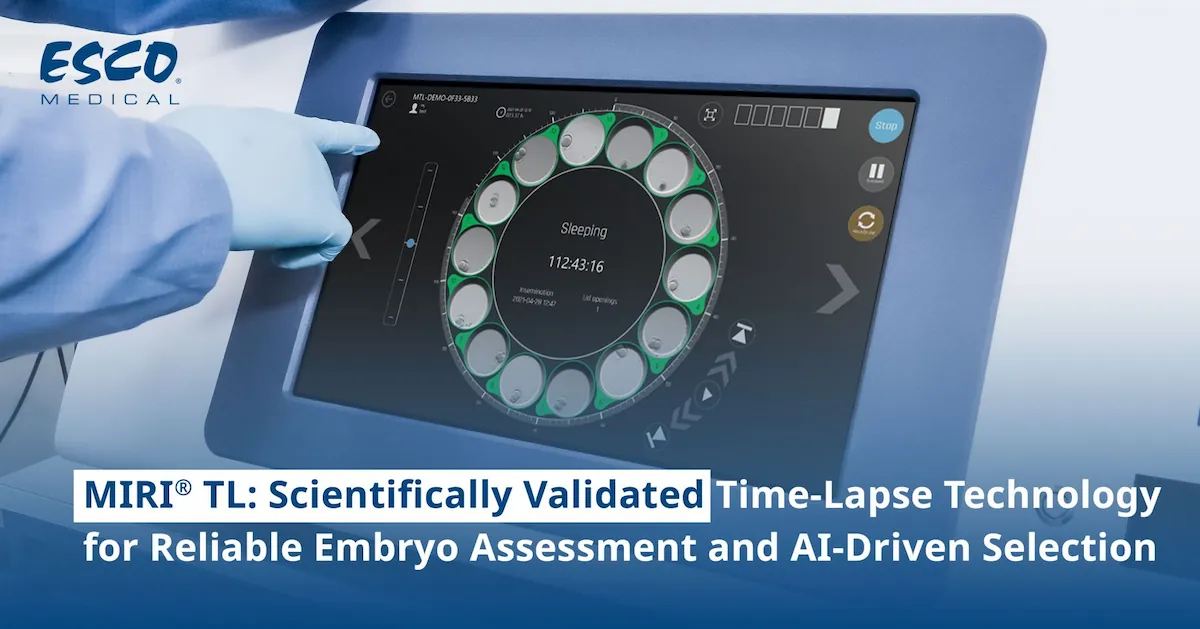
MIRI® TL: A Non-Disturbing Moving Camera System in a Fully Stable Culture Environment
Reliable morphokinetic interpretation depends on a stable, undisturbed culture environment, and this is an area where MIRI® TL has been repeatedly validated. In a randomized controlled trial, Sacks et al. (2024) confirmed that MIRI® TL maintains optimal developmental conditions, with pregnancy and blastocyst formation rates comparable to conventional culture. At the same time, continuous imaging allowed time-lapse monitoring to detect abnormalities such as multinucleation far more frequently, demonstrating both the system's stability and its enhanced observational sensitivity.
MIRI® TL also supports precise evaluation of advanced laboratory procedures. Shelb et al. (2021) examined artificial oocyte activation (AOA) using the system and observed earlier pronuclear formation and more synchronized early cleavages, providing morphokinetic details that can guide refinements to fertilization protocols. Temperature uniformity, another critical factor, has been independently validated. Walters et al. (2020) demonstrated that even a 0.5°C deviation significantly altered cleavage behaviour and blastocyst development. The chamber-level temperature precision of MIRI® TL ensures that recorded morphokinetic timings reflect true biological processes rather than environmental influence.
Environmental robustness has also been demonstrated in animal studies. Mayers et al. (2019) used MIRI® TL for up to 10 days of equine embryo monitoring, capturing rhythmic blastocyst pulsation and detailed cleavage timings while confirming safe levels of light exposure. These findings prove that the system's stability and safety extend across species and research applications.
MIRI® TL with AI-Ready Imaging for Next-Generation Embryo Assessment
As AI becomes increasingly integrated into IVF decision-making, imaging consistency and data quality have become essential. MIRI® TL is widely recognized as an AI-ready platform due to its clean, uniform, biologically stable imaging. Canat et al. (2024) demonstrated that the Biological Event Extraction (BEE) deep-learning model could accurately identify 11 morphokinetic events using MIRI® TL datasets, achieving R² = 0.95 against expert annotations and 96% accuracy for blastocyst prediction.
Further validation comes from Dirvanauskas et al. (2019), who developed the EMCA classifier using exclusively MIRI® TL images. Their model achieved up to 97.62% accuracy in identifying embryo developmental stages and detecting abnormalities in near real-time, showcasing the system's ability to support fast, reliable automated embryo analysis.
Together, these studies confirm that MIRI® TL provides the high-quality, temporally precise datasets required to power next-generation AI tools, positioning it as a future-ready platform for automated embryo assessment and consistent clinical decision-making.
References
- Martínez-Rodero, E., et al. (2025). The Effect of Pipette and Laser-Induced Blastocyst Collapse Before Vitrification on Their Re-Expansion and Clinical Outcome After Warming. Reproductive BioMedicine Online, 50(2), 104476.
- Maghiar, A., et al. (2024). Correlation Between Human Embryo Morphokinetics Observed Through Time-Lapse Incubator and Live Birth Rate. Journal of Personalized Medicine, 14(10), 1045.
- Sacks, G., et al. (2024). Time-Lapse Incubation for Embryo Culture—Morphokinetics and Environmental Stability May Not Be Enough: Results from a Pilot Randomized Controlled Trial. Journal of Clinical Medicine, 13(6), 1701.
- Shelb, S., et al. (2021). Ionophore Application for Artificial Oocyte Activation and Its Potential Effect on Morphokinetics: A Sibling Oocyte Study. Journal of Assisted Reproduction and Genetics, 38(12), 3125–3133.
- Horta, F., et al. (2020). Female Ageing Affects the DNA Repair Capacity of Oocytes Using a Controlled Model of Sperm DNA Damage in Mice. Human Reproduction, 35(3), 529–544.
- Ebner, T., et al. (2020). Time-Lapse Imaging of Cytoplasmic Strings at the Blastocyst Stage Suggests Their Association with Spontaneous Blastocoel Collapse. Reproductive BioMedicine Online, 40(2), 191–199.
- Ebner, T., et al. (2016). Time-Lapse Imaging Provides Further Evidence That Planar Arrangement of Blastomeres Is Highly Abnormal. Archives of Gynecology and Obstetrics, 296(6), 1199–1205.
- Walters, E., et al. (2020). Impact of a Controlled Culture Temperature Gradient on Mouse Embryo Development and Morphokinetics. Reproductive BioMedicine Online, 40(4), 494–499.
- Mayers, M., et al. (2019). Equine Non-Invasive Time-Lapse Imaging and Blastocyst Development. Reproduction, Fertility and Development, 31(12), 1874–1884.
- Canat, L., et al. (2024). A Novel Deep Learning Approach to Identify Embryo Morphokinetics in Multiple Time-Lapse Systems. Scientific Reports, 14, 29016.
- Dirvanauskas, D., et al. (2019). Embryo Development Stage Prediction Algorithm for Automated Time-Lapse Incubators. Computer Methods and Programs in Biomedicine, 177, 161–174.