

In IVF, success depends on more than fertilization alone. Every stage of the embryo journey, from culture and monitoring to transfer, can influence implantation and pregnancy outcomes. This is why IVF laboratories focus not only on embryo quality, but also on maintaining stable conditions and minimizing stress throughout the entire process.
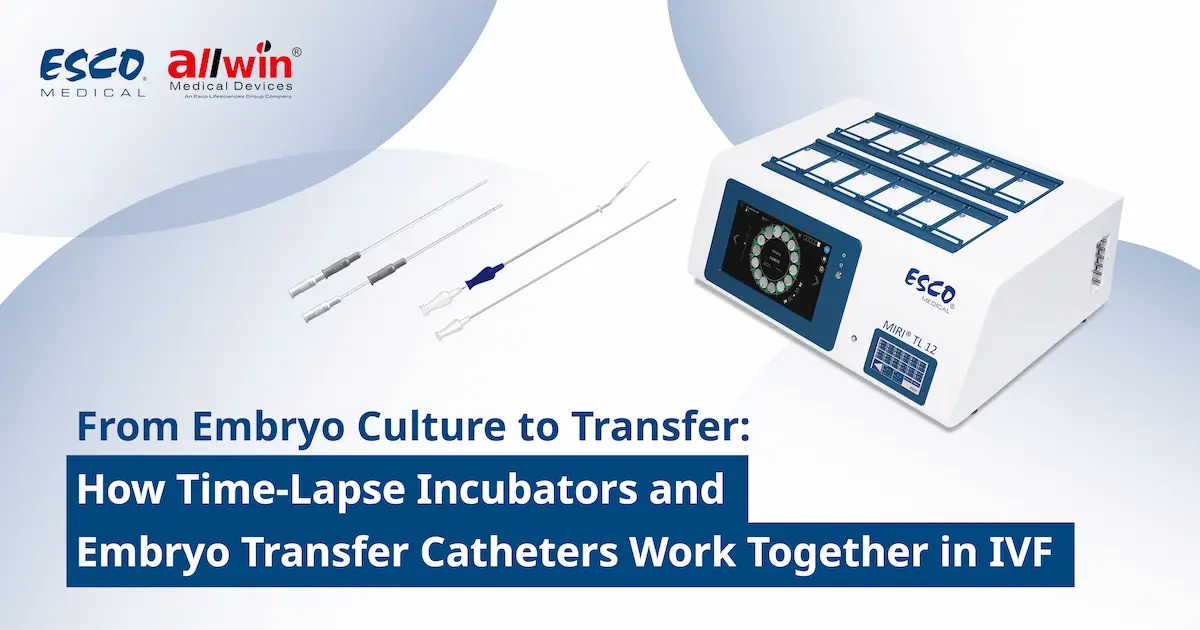
Two devices play a major role in this workflow: IVF time-lapse incubators and embryo transfer catheters. While they serve different purposes, they work closely together to support embryo viability and procedural precision.
The Importance of the Embryo Transfer Process
Embryo transfer is the final and one of the most delicate stages of IVF treatment. Following fertilization and embryo development in the laboratory, the selected embryo is carefully transferred into the uterine cavity using a specialized embryo transfer catheter.
Even when a high-quality embryo is chosen, implantation success can still be affected by embryo handling, uterine disturbance, transfer accuracy, and catheter characteristics, and operator technique may all affect implantation potential. Therefore, the transfer procedure must be performed in a smooth, atraumatic, and highly precise manner to optimize clinical outcomes.
The embryo transfer workflow typically includes:
- Embryo culture under controlled laboratory conditions
- Embryo assessment and selection
- Loading the embryo into a transfer catheter
- Accurate placement into the uterus under ultrasound guidance
Because embryo transfer depends heavily on embryo quality and stability, embryo culture conditions become critically important.
Why Time-Lapse Incubators Matter in IVF
Embryos are highly sensitive to environmental changes such as temperature fluctuations, gas instability, light exposure, and repeated handling. Traditional embryo assessment often requires embryos to be removed from the incubator for observation, potentially disrupting stable culture conditions.
Time-lapse incubators help solve this challenge by combining embryo culture and monitoring within one system. Built-in imaging continuously captures embryo development while embryos remain safely inside the incubator.
This allows embryologists to monitor developmental timing, cleavage patterns, and embryo behavior without disturbing the culture environment. Continuous monitoring also provides additional developmental insights that may support more informed embryo selection.
Benefits of IVF Time-Lapse Incubators
- Continuous embryo monitoring without repeated handling
- Stable temperature and gas conditions during culture
- Reduced embryo exposure to environmental stress
- Improved workflow efficiency for embryologists
- Enhanced embryo assessment through morphokinetic data
By helping maintain embryo stability throughout development, time-lapse incubators support the selection of viable embryos for transfer.
Why Embryo Transfer Catheters Are Equally Important
After embryo selection, the next challenge is ensuring the embryo is transferred safely into the uterus.
The embryo transfer catheter serves as the final delivery system in IVF. Its design can significantly impact procedural ease, uterine comfort, and embryo placement accuracy.
An effective embryo transfer catheter should support:
- Smooth and atraumatic transfer
- Precise catheter positioning
- Minimal uterine disturbance
- Reliable embryo release
- Better clinician control during transfer
A poorly controlled or traumatic transfer procedure may negatively affect implantation potential, even when embryo quality is high.
How Time-Lapse Incubators and Transfer Catheters Work Together
The IVF process is a connected workflow. The embryo selected inside the laboratory must still be transferred carefully to preserve its implantation potential.
Time-lapse incubators help embryologists culture and identify viable embryos under stable conditions, while embryo transfer catheters help clinicians transfer those embryos gently and accurately into the uterus.
Together, these technologies support:
- Better embryo selection
- Reduced embryo stress
- Consistent IVF workflow
- Enhanced procedural precision
- Improved confidence for both embryologists and clinicians
Optimizing both embryo culture and embryo transfer helps clinics maintain quality throughout the entire IVF process.
Supporting IVF Workflow with MIRI® TL and Allwin Embryo Transfer Catheters
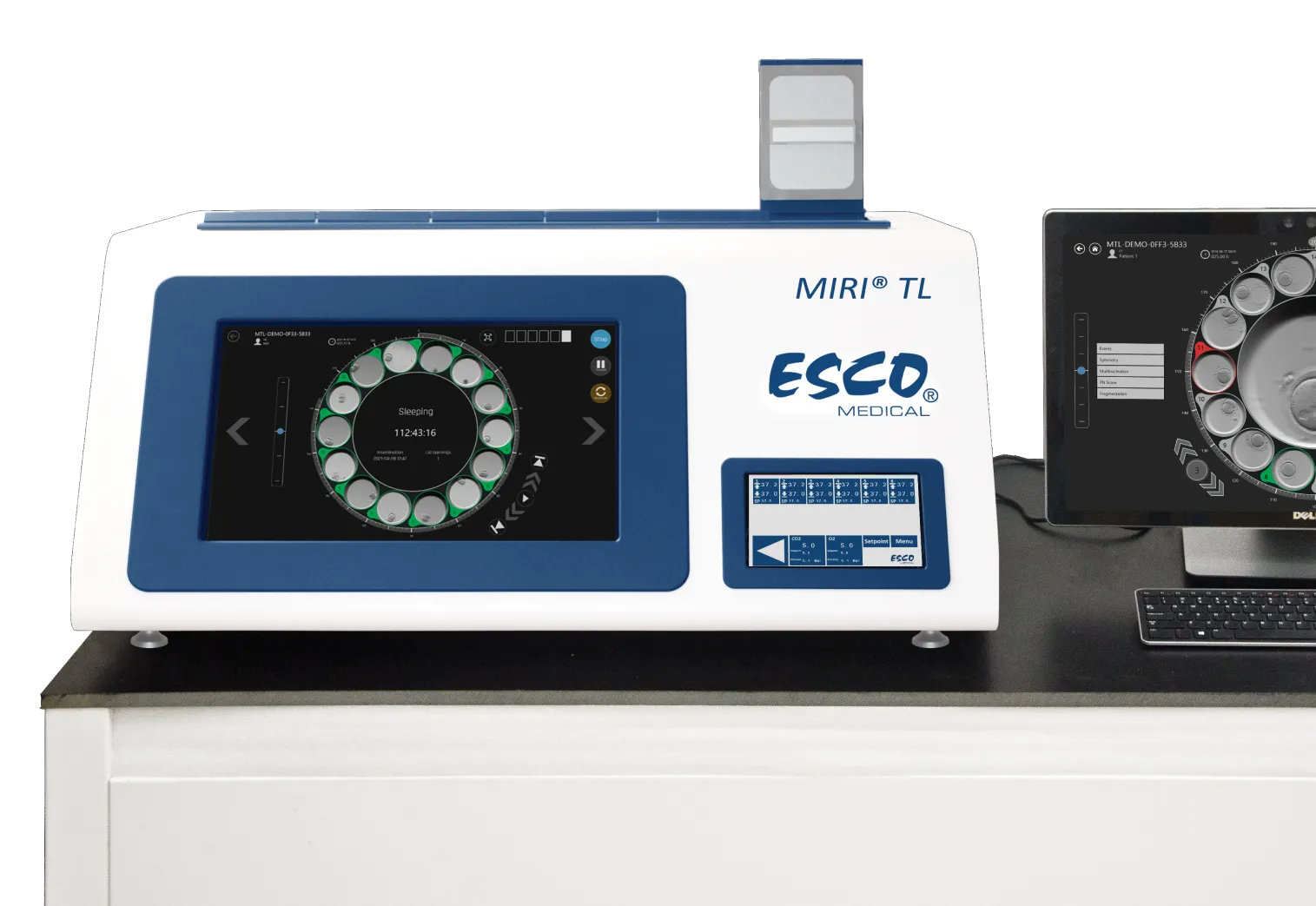
The MIRI® TL Time-Lapse Incubator from Esco Medical is designed to support undisturbed embryo culture and continuous monitoring within stable incubation conditions.
Key advantages of the MIRI® TL include:
- Independent chambers that reduce cross-contamination risk
- Continuous time-lapse monitoring without removing embryos from culture
- Fast temperature and gas recovery
- Integrated HEPA and VOC filtration systems
- UV sterilization of recirculating gas
- Advanced embryo annotation and comparison tools
These features help support embryo safety, laboratory efficiency, and informed embryo selection.
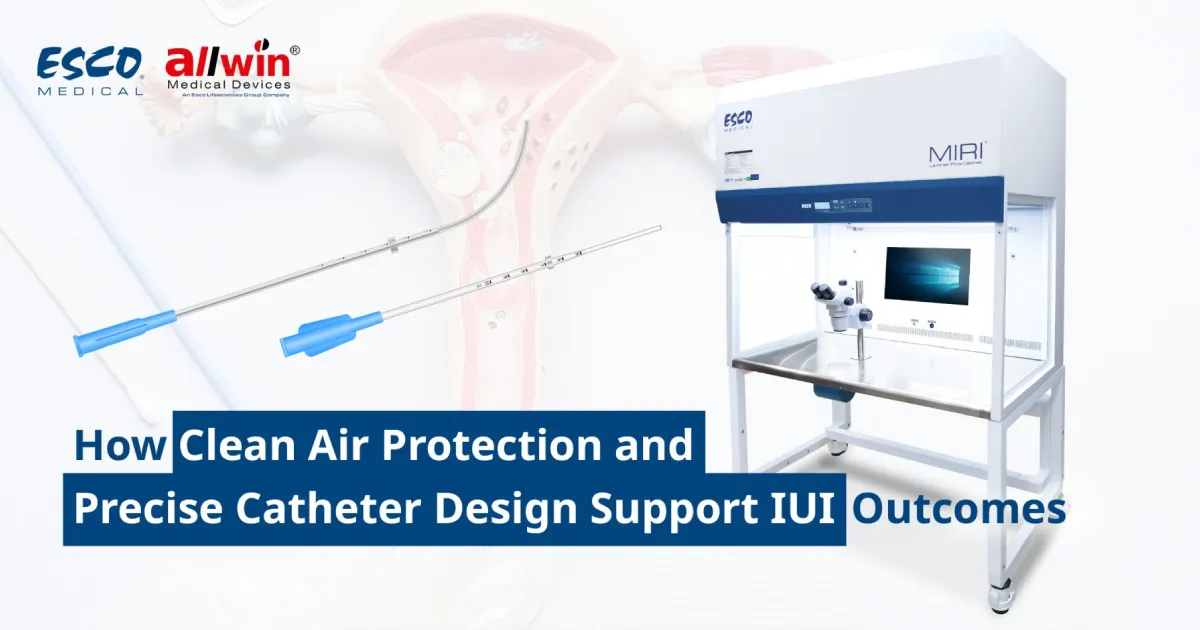
Meanwhile, Allwin Embryo Transfer Catheters from Allwin Medical are designed to support smooth, precise, and atraumatic embryo transfer procedures, with options developed to accommodate different clinical preferences and transfer techniques.
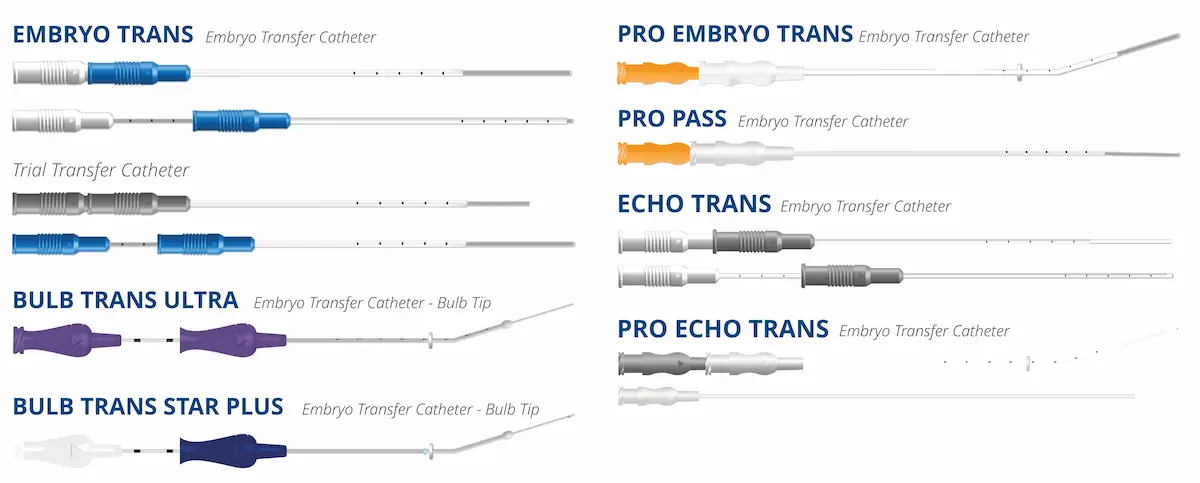
In more challenging or potentially traumatic transfer cases, BULB TRANS features a smooth and thin with bulb tip inner catheter designed to help reduce cervical trauma during insertion, while BULB TRANS STAR, ECHO TRANS, and PRO ECHO TRANS incorporate echogenic inner catheters to enhance ultrasound visualization for more precise catheter positioning.
Key benefits include:
- Soft and smooth catheter tips designed to minimize trauma
- Flexible or shapeable sheaths for easier navigation
- Echogenic metal band or fully echogenic on the inner catheter to provide visibility under ultrasound
- Silicone depth markers for accurate placement
- Orientation markers for improved procedural control
- Mouse Embryo Assay (MEA) and Limulus Amebocyte Lysate (LAL) tested materials that support embryo safety
Clinical Evidence: Clinical guidelines from the American Society for Reproductive Medicine have demonstrated that ultrasound-guided embryo transfer can improve clinical pregnancy and live birth rates compared with blind transfer techniques.
Together, the MIRI® TL and Allwin embryo transfer catheters create a workflow-focused IVF solution. The incubator supports embryo development and selection under stable conditions, while Allwin Embryo Transfer Catheters help ensure the selected embryo is delivered gently and accurately into the uterus.
By optimizing both embryo culture and embryo transfer, IVF clinics can help improve consistency, procedural confidence, and overall patient care.
References
Practice Committee of the American Society for Reproductive Medicine. (2017). Performing the embryo transfer: A guideline. American Society for Reproductive Medicine. https://www.asrm.org/practice-guidance/practice-committee-documents/performing-the-embryo-transfer-a-guideline-2017/