

Intrauterine insemination (IUI) is one of the most commonly performed assisted reproductive technology procedures. While it is often considered a straightforward treatment, several hidden risks can silently compromise sample quality before the procedure even begins.
Understanding where these risks occur and how to address them is essential for clinicians and laboratory teams who want to support consistent IUI outcomes.
What Makes IUI More Vulnerable Than It Appears
IUI success depends on more than clinical technique alone. Every stage of the workflow contributes to the quality of the final outcome.
Key factors that influence IUI success include:
- Quality and motility of the prepared sperm sample
- Integrity of the sample throughout each preparation step
- Protection of open samples from environmental contamination
- Precision and atraumatic technique during clinical insemination
What is frequently underestimated is how much sample integrity can be affected during the preparation stage, before the sample ever reaches the patient.
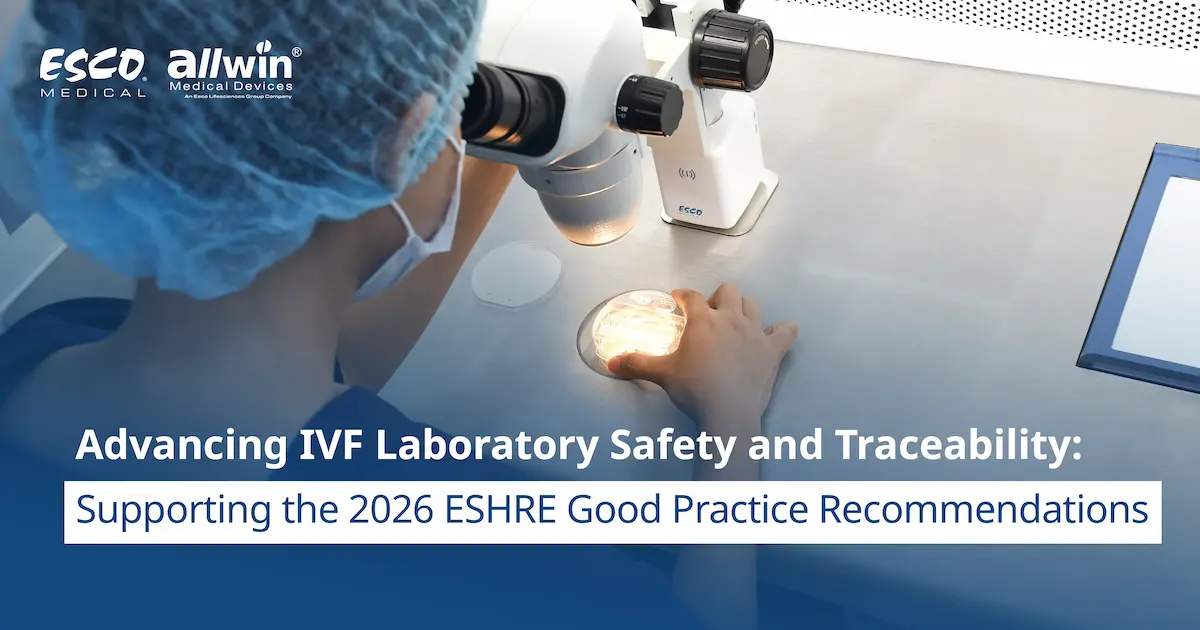
Unlike oocytes and embryos, which require precise control of temperature, pH, and gas composition and are therefore cultured inside dedicated incubators, sperm samples during preparation are handled in open vessels directly on the laboratory work surface. At every step of preparation, the sample is exposed to the surrounding environment.
The Hidden Risk: Air Quality at the Work Surface
A review published in Andrology concluded that both animal and human studies have suggested an association between poor laboratory air quality conditions and impaired embryo development, resulting in decreased implantation and pregnancy rates.
Key sources of airborne contamination in ART laboratory environments include:
- Airborne particulate matter and microbial aerosols in laboratory air
- Volatile organic compounds (VOCs) generated by equipment, cleaning agents, and laboratory materials
- Localized air turbulence from HVAC systems, personnel movement, and nearby equipment
- Particles generated by centrifuges and other processing equipment during sample preparation
During IUI sperm preparation, these risks are present at every open-vessel handling step:
- Semen analysis and assessment
- Sperm washing
- Density gradient centrifugation
- Final IUI sample preparation and resuspension
At each step, the sample is directly exposed to the surrounding laboratory air. Contamination introduced at the work surface during preparation can carry through to the final sample and ultimately into the patient during insemination.
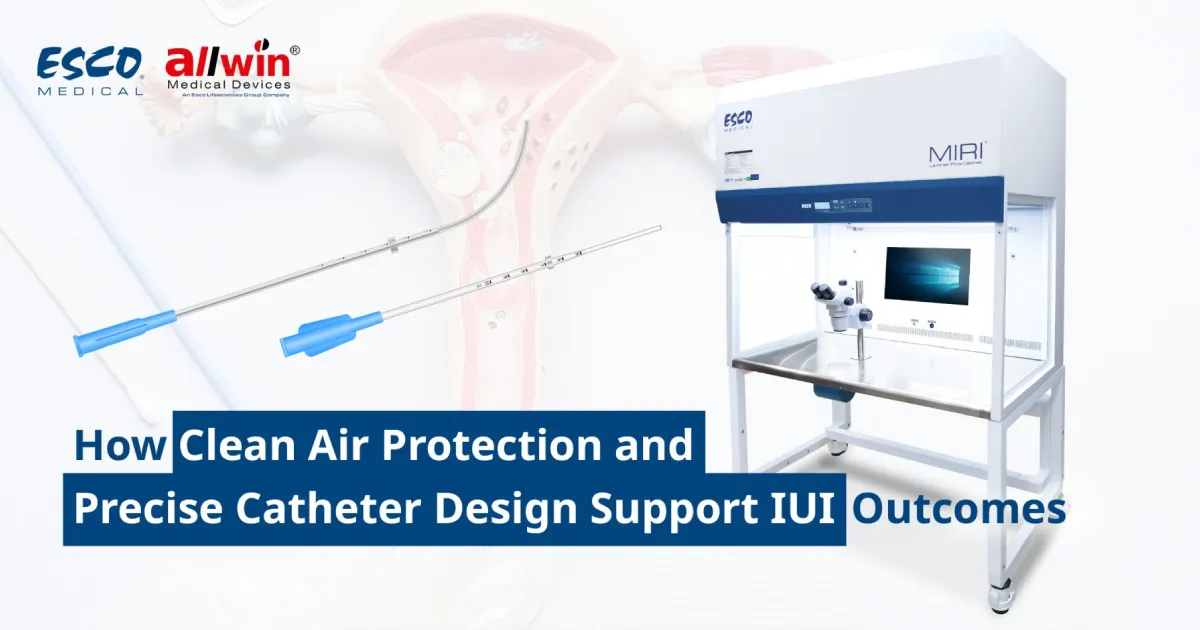
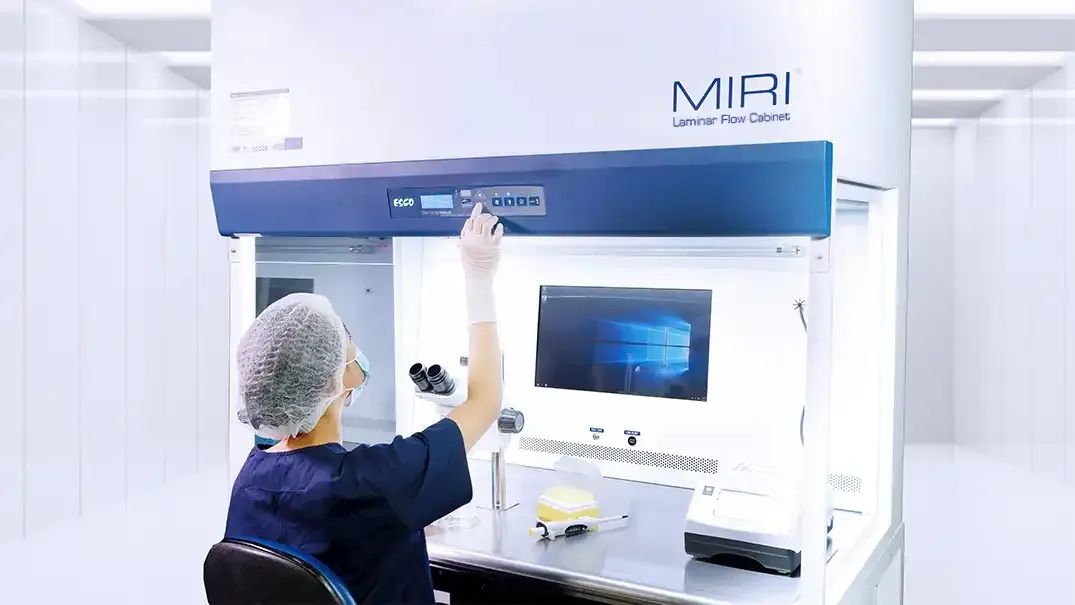
Localized Clean Air Protection: The MIRI® Laminar Flow Cabinet
A laminar airflow system addresses this risk by delivering a continuous, uniform flow of HEPA or ULPA-filtered air directly over the work surface. Rather than relying on room-level cleanliness alone, it creates a protected clean air zone precisely at the point where samples are open and exposed.
The Esco Medical MIRI® Laminar Flow Cabinet is specifically designed for IVF and ART laboratory applications, making it well suited for andrology and sperm preparation workflows where open vessel handling is routine.
Key features include:
- Vertical HEPA/ULPA-filtered laminar airflow delivered directly at the work surface
- ISO Class 3 clean-air protection at the critical working zone
- Uniform airflow to minimize turbulence and reduce airborne particle deposition on open samples
- Reduced contamination risk during open vessel sperm preparation procedures
- Workspace design optimized for andrology and IVF laboratory workflows
For andrology and sperm preparation procedures, where clean air at the work surface is the primary protection need, the MIRI® Laminar Flow Cabinet provides targeted and appropriate support.
From Laboratory to Clinic: The IUI Transfer Stage
Once the sperm sample has been prepared under protected conditions, the clinical stage begins. The prepared sample must be delivered safely, precisely, and comfortably into the uterine cavity.
Key considerations at the clinical transfer stage include:
- Smooth and atraumatic cervical navigation
- Accurate positioning and sample placement within the uterine cavity
- Minimal uterine disturbance during and after catheter insertion
- Controlled and reliable sample release during insemination
- Clinician adaptability to varying patient anatomies and procedural needs
Allwin IUI Catheters: Designed for Precise and Comfortable Insemination
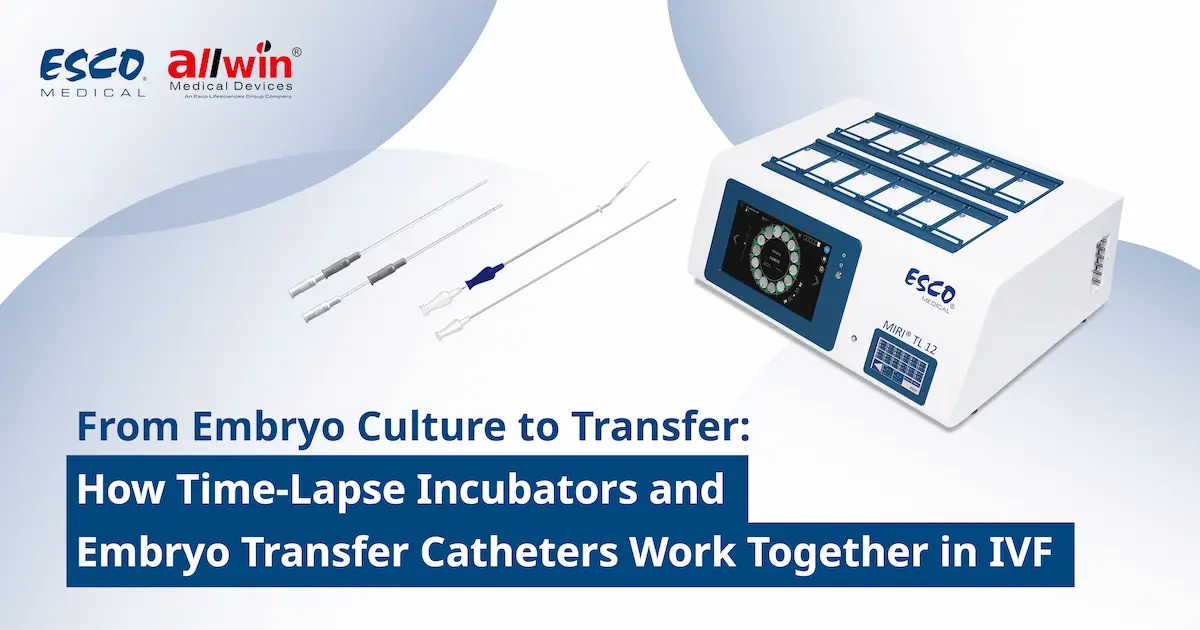
Allwin Medical offers a range of specialized IUI catheters designed to accommodate different clinical needs, uterine anatomies, and procedural preferences. Each catheter option is HSSA tested and developed to support smooth, controlled, and hygienic sample delivery during insemination.
The Allwin IUI catheter range includes:
- Integra IUI Catheter — designed for standard insemination procedures with smooth and controlled sample delivery
- Flexi IUI Catheter — flexible design to support navigation through varying uterine anatomies
- Trackable IUI Catheter — designed to support procedural visibility and positioning during insemination
- Curve IUI Catheter — pre-shaped curve to assist navigation in anatomically challenging cases
- Insemia IUI Catheter — designed for efficient and hygienic insemination workflows
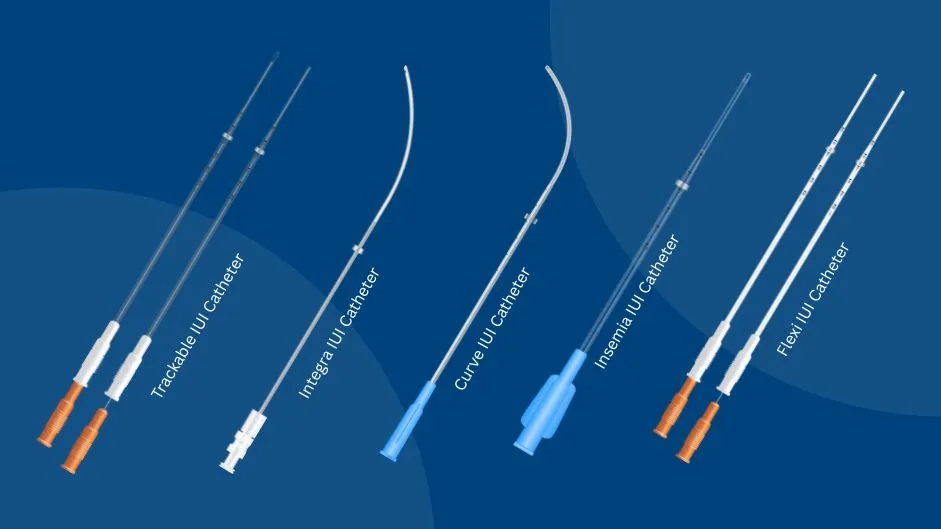
Across the range, key design features support:
- Smooth cervical navigation to minimize patient discomfort
- Atraumatic insertion to reduce the risk of uterine disturbance
- Accurate sample placement within the uterine cavity
- Reliable and controlled sample release during insemination
- Hygienic single-use design for consistent procedural safety
Together, these design characteristics help clinicians perform IUI procedures with greater confidence, comfort, and consistency, regardless of anatomical variation or procedural complexity.
A Connected Workflow: Protecting Sample Quality From Preparation to Transfer
For IUI clinicians, the quality of the final outcome depends on the integrity of each stage of the workflow. A well-prepared sperm sample can only reach its full potential if it is delivered safely and accurately during the insemination procedure.
The MIRI® Laminar Flow Cabinet and Allwin IUI catheters address two distinct but connected points in this workflow:
- Laboratory stage — The MIRI® Laminar Flow Cabinet helps protect sperm samples from airborne contamination at the work surface during andrology and IUI preparation
- Clinical stage — Allwin IUI catheters help ensure the prepared sample is delivered smoothly, accurately, and comfortably into the uterine cavity during insemination
When both stages are properly supported, clinicians can approach IUI procedures with greater confidence in both sample quality and procedural precision.
Learn More
- MIRI® Laminar Flow Cabinet by Esco Medical
- IUI Catheters by Allwin Medical
To learn how these solutions can support your andrology and IUI workflow, contact our team today.
Reference
Esteves, S. C., & Bento, F. C. (2016). Air quality control in the ART laboratory is a major determinant of IVF success. Asian Journal of Andrology, 18(4), 596–599. https://doi.org/10.4103/1008-682X.166433